
The World's Great Stock Exchanges

When most people picture the stock market, they picture one place: Wall Street. The New York Stock Exchange, the NASDAQ, the opening bell, the closing bell. It's an understandable picture, but an incomplete one. In reality, there are more than 80 stock exchanges operating around the world, and together they form a continuous, interconnected marketplace that never truly sleeps.
Each exchange is a product of the economy and culture that created it. The Tokyo Stock Exchange reflects Japan's industrial prowess and its tradition of patient, long-term corporate relationships. The London Stock Exchange carries five centuries of financial history and remains the gateway to European and emerging market capital. The National Stock Exchange of India pulses with the energy of one of the world's fastest-growing economies.
Understanding the major exchanges is not just geography trivia. It tells you where different kinds of companies list, how trading hours create a global relay race of market activity, and how the composition of each exchange shapes the opportunities available to investors. In this article, we tour the world's most important exchanges, region by region, and explain what makes each one distinct.
FinAi lens: markets operate as a global relay race. A move in Asia can shape sentiment in Europe, and both can influence the U.S. open. FinAi's role in this series is to help traders think beyond one chart, one exchange, or one trading session.
The Americas: Where the Modern Market Was Born
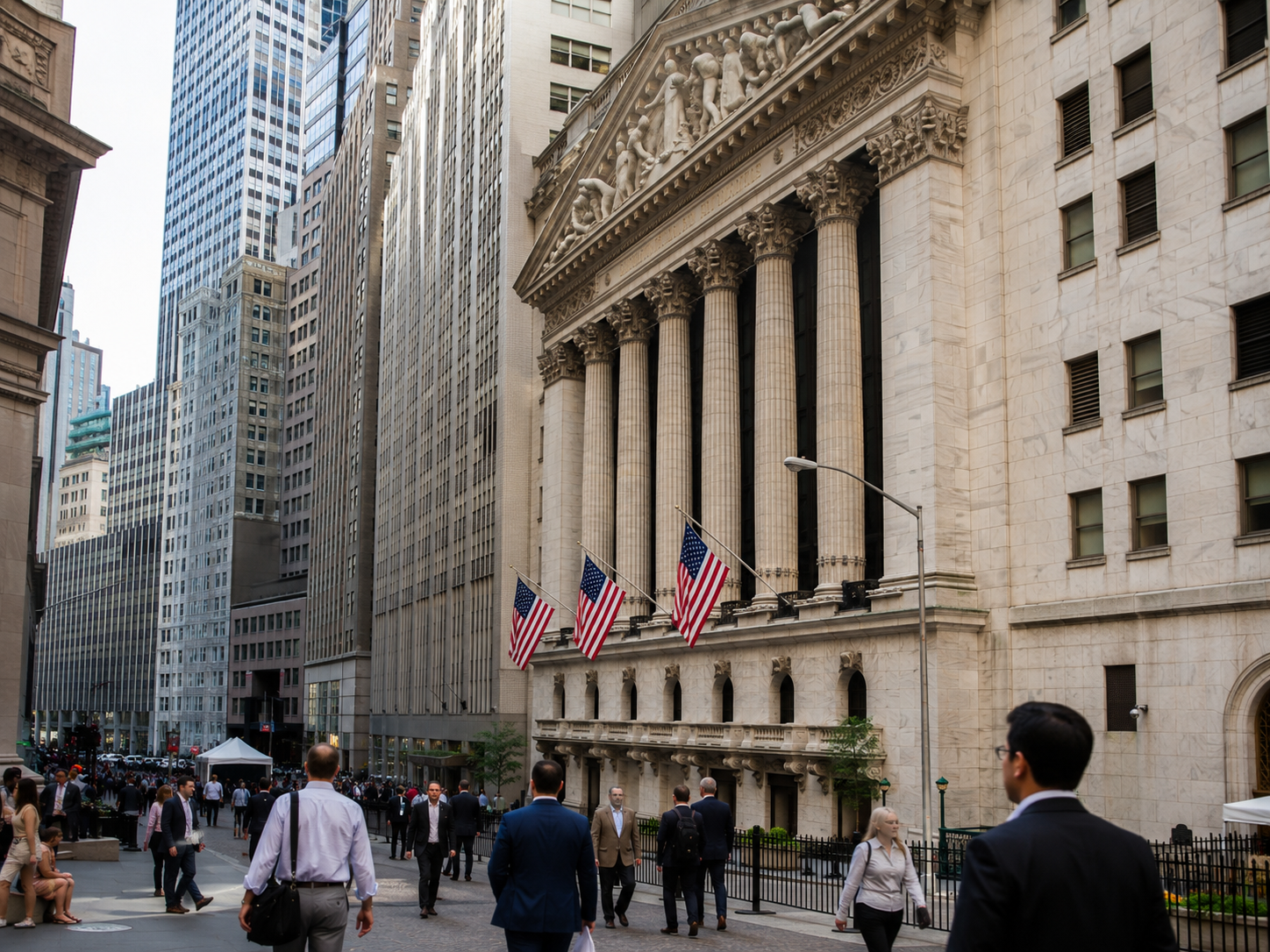
New York Stock Exchange (NYSE)
The NYSE is the largest stock exchange in the world by market capitalization, and it is, in many ways, the symbol of capitalism itself. Founded in 1792 under a buttonwood tree on Wall Street by 24 stockbrokers, it has grown into a marketplace where more than $25 trillion in equity value changes hands each year.
The NYSE is home to many of the world's largest and oldest companies: JPMorgan Chase, Berkshire Hathaway, ExxonMobil, Walmart, and hundreds more. These tend to be established, blue-chip corporations with long track records. To list on the NYSE, companies must meet stringent financial requirements, which is part of why an NYSE listing has long been considered a mark of corporate prestige.
The NYSE still maintains a physical trading floor in Lower Manhattan, one of the last of its kind. Though most trading is now electronic, the floor serves as both a functional venue and a powerful symbol. The opening bell at 9:30 a.m. Eastern Time marks the start of the U.S. trading day; the closing bell at 4:00 p.m. ends it.
- Founded: 1792
- Location: New York, USA
- Trading hours: 9:30 a.m. - 4:00 p.m. ET (Monday-Friday)
- Market cap: Approx. $25+ trillion (largest in the world)
- Known for: Blue-chip corporations, financial prestige, iconic trading floor
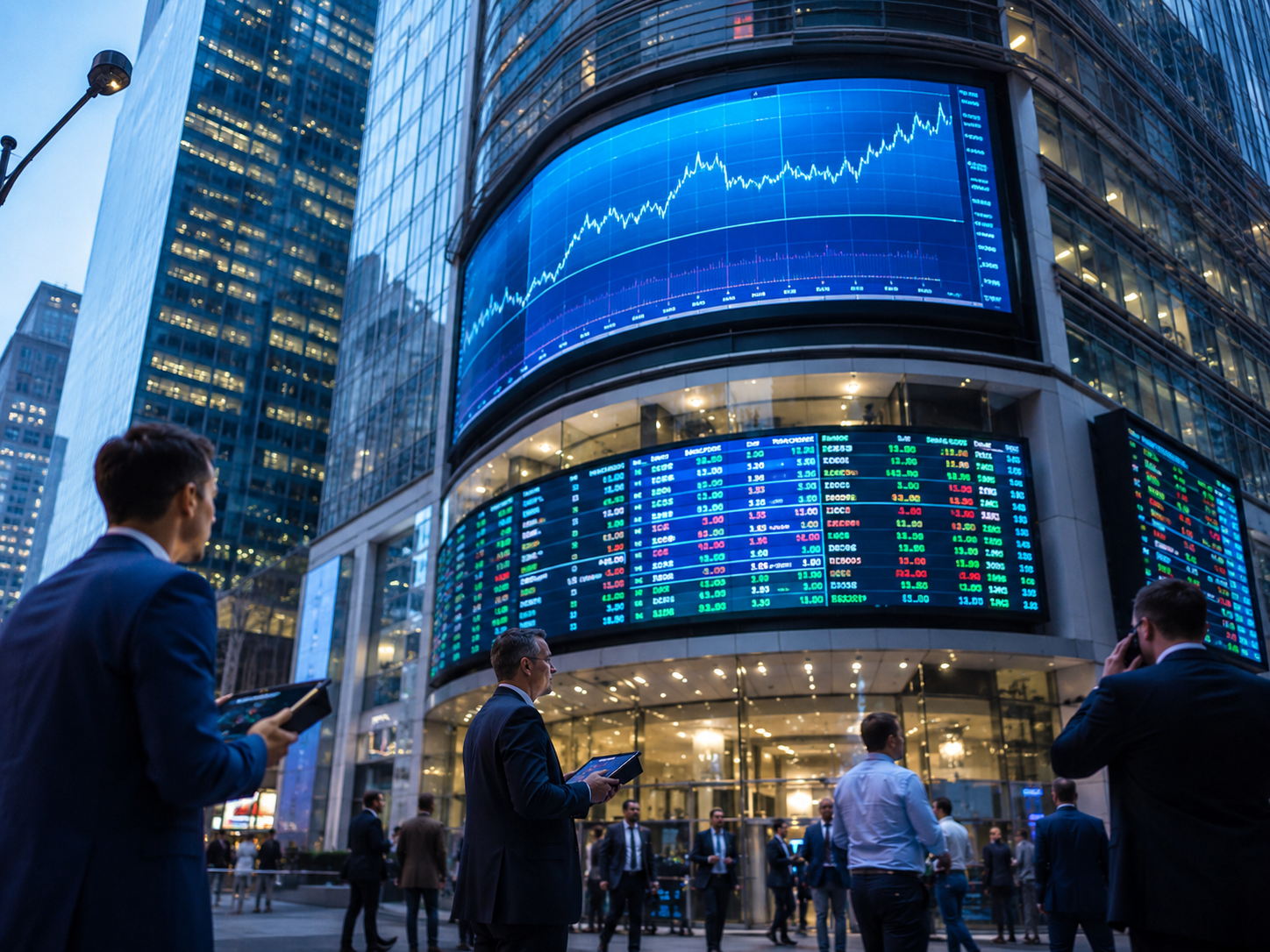
NASDAQ
If the NYSE is the establishment, NASDAQ is the disruptor that became the establishment. Launched in 1971 as the world's first fully electronic stock exchange, NASDAQ was born to be different. It had no physical trading floor, no specialists in colored jackets. Just computers matching buyers and sellers in milliseconds.
Today, NASDAQ is the second-largest exchange in the world and the home of technology. Apple, Microsoft, Amazon, Alphabet (Google), Meta, Netflix, and Tesla all trade here. The NASDAQ Composite index, which tracks all stocks listed on the exchange, has become a proxy for the health of the global technology sector. When people talk about 'tech stocks,' they are largely talking about NASDAQ.
NASDAQ's listing requirements are somewhat more flexible than the NYSE's, which has made it the preferred venue for growth-stage companies and tech startups going public. Many of the companies that define our digital lives today got their start as NASDAQ listings.
- Founded: 1971
- Location: New York, USA (fully electronic)
- Trading hours: 9:30 a.m. - 4:00 p.m. ET (Monday-Friday)
- Market cap: Approx. $20+ trillion
- Known for: Technology giants, growth companies, electronic trading
Together, the NYSE and NASDAQ account for roughly 45% of total global equity market capitalization. Understanding them is understanding nearly half the world's stock market.
Europe: History, Depth, and Diversity
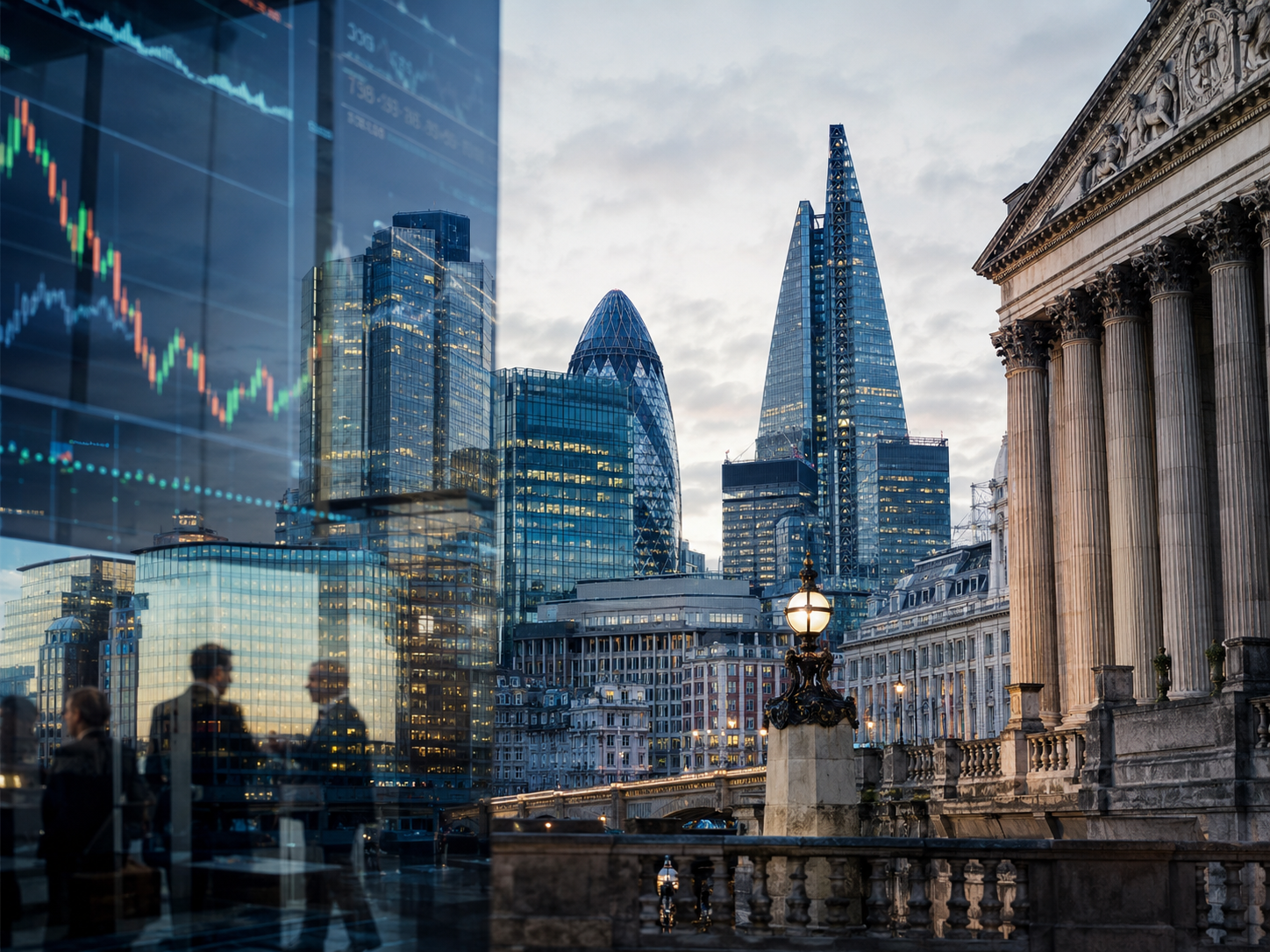
London Stock Exchange (LSE)
The London Stock Exchange traces its roots to 1698, when brokers began meeting in Jonathan's Coffee House to trade shares. Over the following three centuries, London became the world's dominant financial center, a position it held until the rise of New York in the 20th century. Today, the LSE remains one of the most international exchanges in the world.
What distinguishes the LSE is its global reach. It lists hundreds of companies from outside the UK, including major multinationals from emerging markets in Africa, Asia, and Latin America. The FTSE 100 index, which tracks the 100 largest companies listed in London, is heavily weighted toward global industries: oil and gas, mining, pharmaceuticals, and financial services. Many of the FTSE 100's biggest companies earn the majority of their revenues outside the UK.
The LSE also operates the Alternative Investment Market (AIM), a sub-market designed for smaller, growth-oriented companies with less stringent listing requirements. AIM has become one of the world's most successful markets for small-cap equities.
- Founded: 1698 (formally incorporated 1801)
- Location: London, UK
- Trading hours: 8:00 a.m. - 4:30 p.m. GMT
- Known for: International listings, FTSE 100, commodities and energy companies
Euronext
Euronext is the largest stock exchange operator in Europe, running exchanges in Amsterdam, Brussels, Dublin, Lisbon, Milan, Oslo, and Paris. It was created in 2000 through the merger of the Amsterdam, Brussels, and Paris exchanges, making it one of the first truly pan-European trading venues.
The Amsterdam exchange holds a special place in financial history: it is, as we noted in Article 01, the world's oldest stock exchange, founded in 1602 to trade shares of the Dutch East India Company. Today, Amsterdam is also one of Europe's leading hubs for technology and biotech listings. Paris contributes luxury goods giants like LVMH and Hermes. Milan adds Italy's industrial and fashion conglomerates.
Euronext's breadth makes it a useful barometer for European economic health — its composition spans manufacturing, luxury goods, banking, energy, and technology across multiple national economies.
- Founded: 2000 (merger); oldest component exchange: Amsterdam, 1602)
- Location: Multiple cities across Europe
- Known for: Pan-European breadth, luxury goods, industrial companies
Deutsche Borse / Frankfurt Stock Exchange
Germany's Frankfurt Stock Exchange, operated by Deutsche Borse, is the primary exchange in Europe's largest economy. It is home to the DAX index, which tracks Germany's 40 most important publicly traded companies. The DAX is heavily weighted toward the industrial and automotive sectors that define Germany's export-driven economy: Volkswagen, BMW, Mercedes-Benz, Siemens, BASF, and SAP are all major constituents.
Frankfurt's exchange is closely watched as an indicator of European manufacturing health. When German industrial output falls, the DAX often reflects it before other European indices do.
- Founded: 1585
- Location: Frankfurt, Germany
- Trading hours: 9:00 a.m. - 5:30 p.m. CET
- Known for: DAX index, industrials, automotive sector, German manufacturing
Asia-Pacific: The World's Growth Engine
Tokyo Stock Exchange (TSE) / Japan Exchange Group
The Tokyo Stock Exchange is the largest exchange in Asia by market capitalization and the third-largest in the world. Founded in 1878, it lists some of Japan's most recognized global brands: Toyota, Sony, SoftBank, Nintendo, Honda, and Mitsubishi. In 2013, the TSE merged with the Osaka Securities Exchange to form Japan Exchange Group (JPX), creating a more consolidated and internationally competitive marketplace.
Investing in Tokyo comes with some unique characteristics. Japanese companies have historically maintained lower return-on-equity ratios than Western counterparts, reflecting a corporate culture that often prioritizes stability and relationships over shareholder returns. In recent years, regulatory pressure has pushed many Japanese companies to improve capital efficiency, making the market increasingly attractive to international investors.
The Nikkei 225, Japan's best-known index, tracks 225 major stocks and is one of the world's most closely watched market benchmarks.
- Founded: 1878
- Location: Tokyo, Japan
- Trading hours: 9:00 a.m. - 3:30 p.m. JST (with lunch break 11:30-12:30)
- Known for: Toyota, Sony, consumer electronics, automotive, tech conglomerates
Hong Kong Stock Exchange (HKEX)
Hong Kong's exchange occupies a unique position in global finance: it is the primary gateway between mainland Chinese capital markets and the rest of the world. For decades, international investors who wanted exposure to China's economic growth but were uncomfortable with the restrictions of the mainland markets used HKEX as their preferred entry point.
HKEX lists many of China's largest companies — including Alibaba, Tencent, Xiaomi, and major Chinese banks — alongside Hong Kong's own financial and property giants. Its Stock Connect programs link it directly to the Shanghai and Shenzhen exchanges, allowing investors in each market to buy and sell shares in the other.
Political and regulatory developments in Hong Kong and mainland China make HKEX one of the more closely monitored exchanges for geopolitical risk. Its trading volumes and IPO pipeline are often cited as indicators of sentiment toward Chinese equities globally.
- Founded: 1891
- Location: Hong Kong, China
- Trading hours: 9:30 a.m. - 4:00 p.m. HKT
- Known for: China exposure, Alibaba, Tencent, Stock Connect, IPO pipeline
Asia's exchanges collectively handle more trading volume than Europe's. Ignoring them is ignoring more than half the world's economic growth story.
National Stock Exchange of India (NSE)
India's National Stock Exchange, founded in 1992, is one of the most remarkable stories in modern financial history. In just three decades it has grown from a startup exchange designed to modernize India's fragmented capital markets into the world's largest derivatives exchange by trading volume and one of its most dynamic equity markets.
The NSE is the beating heart of India's capital markets. The Nifty 50 index, which tracks the 50 largest companies listed on the NSE, has delivered extraordinary long-term returns as India's economy has expanded. Key sectors represented include information technology (Infosys, TCS, Wipro), banking (HDFC, ICICI), consumer goods, and pharmaceuticals.
India's exchange is worth watching not just for current returns but for what it signals about the future. With over 1.4 billion people, a young population, and a rapidly digitalizing economy, India is widely expected to become one of the world's top three economies in the coming decades.
- Founded: 1992
- Location: Mumbai, India
- Trading hours: 9:15 a.m. - 3:30 p.m. IST
- Known for: Derivatives volume, Nifty 50, IT sector, India's growth story
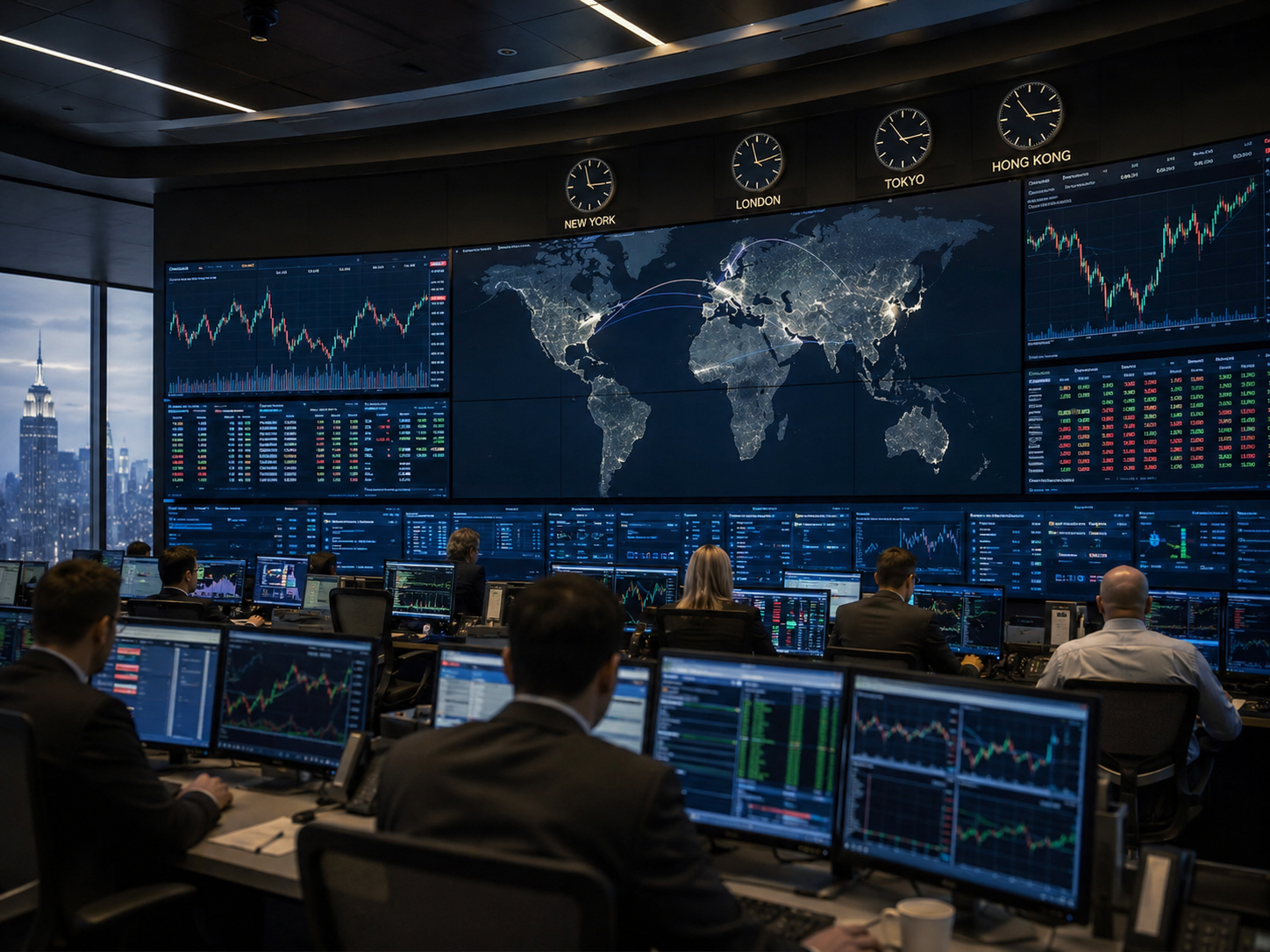
How Global Sessions Create a 24-Hour Market
One of the most practically useful things to understand about global exchanges is how their trading hours interact. The world's major markets open and close in a continuous relay, passing the baton of price discovery around the globe with only a brief gap between the U.S. close and the Asian open.
The sequence, broadly speaking, runs: Tokyo and Sydney open the week in Asia, followed by Hong Kong and Shanghai. As Asian markets wind down, European markets in London and Frankfurt take over. Then, as Europe closes, the New York open brings the highest-volume session of the day. By the time New York closes, Tokyo is already preparing to open again.
This matters for several practical reasons. Events that happen outside market hours in your home country will be reflected in futures markets and other exchanges before your local market opens. A geopolitical event overnight, an earnings report from a major Asian company, or a central bank announcement from Europe can all move the prices you'll see at your local open. Understanding the global relay helps you interpret morning price movements that might otherwise seem to come from nowhere.
Markets are open somewhere in the world nearly 24 hours a day, five days a week. Overnight moves in Tokyo and London shape what you'll see when New York opens.
What Exchange Listing Signals About a Company
Where a company chooses to list its shares is a deliberate business decision, and it communicates something meaningful to investors.
A company that lists on the NYSE is signaling that it has met the exchange's rigorous financial requirements and wants the prestige and liquidity that come with being in the world's most prominent equity venue. A tech startup that lists on NASDAQ is choosing an exchange whose culture, investor base, and analyst ecosystem are purpose-built for high-growth companies.
A Chinese company that chooses to list on HKEX rather than a mainland exchange may be signaling that it wants access to international capital and is willing to submit to Hong Kong's disclosure standards. A company that dual-lists on both London and New York is maximizing its visibility to both European and American institutional investors.
Even the decision to list in one's home market versus seeking a foreign listing carries information. Indian IT companies like Infosys have chosen U.S. listings via American Depositary Receipts (ADRs) to attract American institutional capital and gain analyst coverage from Wall Street firms.
Putting It Together
The world's stock exchanges are not a random collection of trading venues. Each one is a reflection of the economy that built it, the industries that dominate it, and the investors it was designed to serve. The NYSE and NASDAQ together tell the story of American corporate capitalism. The LSE tells the story of a historically global financial center. Tokyo tells the story of Japan's industrial relationships. Mumbai tells the story of a billion-person economy in acceleration.
For an investor, this geographic diversity is a feature, not a complexity to be avoided. Different exchanges perform differently at different points in the global economic cycle. A portfolio that is exclusively domestic is a portfolio that has decided, by default, to ignore the majority of the world's investable opportunities.
In Article 03, we'll add the next layer to our mental map: the GICS framework, which organizes all publicly traded companies across all these exchanges into 11 sectors. That framework will give you a common language for analyzing companies regardless of which exchange they trade on.
KEY TAKEAWAYS
v The NYSE and NASDAQ together represent nearly half of global equity market cap. The NYSE favors blue-chip companies; NASDAQ favors technology and growth.
v The LSE is one of the world's most international exchanges, listing hundreds of companies from outside the UK.
v Euronext spans seven European countries, reflecting the diversity of continental European economies.
v Tokyo and Hong Kong are Asia's largest exchanges; HKEX is the primary gateway to Chinese equities for international investors.
v India's NSE is the world's largest derivatives exchange by volume and one of its fastest-growing equity markets.
v Global markets trade in a continuous relay — events in Asia and Europe shape what opens in New York.
v Where a company chooses to list signals something about its strategy, investor base, and ambitions.
How FinAi Fits In
Global markets do not wait for one trader's schedule. FinAi can help users monitor market context across sessions, so overnight strength, weakness, or sector leadership does not arrive as a surprise.
This makes FinAi especially useful for traders who want a broader view before the open, during active sessions, and when global catalysts shift sentiment.
Use FinAi to monitor market context beyond your screen time.
Request access to AI-assisted trading intelligence for clearer market decisions.
FAQ
Which is the largest stock exchange in the world?
The New York Stock Exchange (NYSE) is the largest by market capitalization, followed by NASDAQ. Together they account for roughly 45% of global equity market cap.
Why do exchanges in different regions matter to one investor?
Markets run as a global relay race — a move in Asia can shape sentiment in Europe and influence the U.S. open, so global context affects almost any portfolio.
Are emerging-market exchanges riskier?
Emerging-market exchanges often offer faster growth but come with higher volatility, less liquidity, and different regulatory regimes — so position sizing matters more.
What is the New York Stock Exchange?
The NYSE is the world's largest stock exchange by market cap, known for blue-chip listings, an iconic trading floor and strict listing requirements.